Bonnie Kiefer
bonnievkiefer@gmail.com call/text: (561) 938-4685
my blog

TIP of the Day.... Massage Therapy or Chiropractic? Are they both important? Which one should be first?
Many new clients that I meet have had a chiropractor come out to adjust their horse (before) their horse has had a massage. Some clients have only had chiropractors work on their horse without ever having their horse massaged. For those clients, I share my point of view to help them understand the benefits and gain awareness of how massage therapy prior to a chiropractic adjustment makes more sense and achieves better results.
Why prepare the horse with massage therapy before chiropractic?
When the horse's muscles are relaxed and warmed up, and the horse can achieve its best range of motion in its head, neck, body and all 4 limbs as much as possible and the horse feels much more calm and relaxed, the chiropractor can have the most success during adjustments, resulting in the best outcome for the horse. Soreness in the horse's body will have been either eliminated or significantly reduced and helps narrow down the source(s) of any pain or discomfort and any mobility issues which can then be shared with the chiropractor. Having good "muscle memory" and relieving muscles that have been tight, tense or rigid are much easier to keep trained to stay relaxed. However, if massage is not performed and practiced before a chiropractor and the horse is tense or rigid, the muscle memory tends to revert back quickly after the adjustment. If the two services are reversed and chiropractic is performed before massage, for one, this eliminates the possibility that a massage session could have fixed the initial issue, and two, it just doesn't help the horse to have the sequence performed this way. Over the years I have tracked these two different scenarios and have noticed there are not the same level of results and success for the horse and in many cases was a waste of money and time to both the horse and the client. As for feedback from certain Chiropractors, some do not want to perform an adjustment if the horse is sore right after massage, but this is extremely rare. I find it best to have the two services separated by a day or two, just in case. Some chiropractors offer massage as part of their service, which is wonderful, but I feel these should be stand-alone services performed separately in their entirety. I have noticed Chiropractors stay busier for the clients who do not have their horses massaged at all or often enough. Many if not most clients do not realize massage for their horse is something important to do first, hence why I decided to write this post to help with awareness specifically on this topic. I sincerely appreciate any chiropractors out there who advise clients to have their horse maintained with massage therapy and body work. In tracking my cases over the years, once clients started maintaining massage therapy for their horse, the Chiropractor was rarely needed if at all, unless something came up abruptly with the horse's skeletal system that only the Chiropractor could help with. When equine professionals truly prioritize the horse and not the money, it should not be a problem for the Chiropractor to not be needed as much or unless absolutely necessary, especially since there is always an extremely high demand for chiropractors in the horse world. With respect to budget, it helps to keep up with consistent massage therapy. Chiropractic visits are typically much more expensive than massage therapy.
TIP of the Day >>> Help with Top Line Development
Many clients ask me how to improve their horse's top line and I especially get these requests for the more difficult cases when the owners/trainers have said they've tried just about everything. Looking into each case, I first check for good nutrition, as there are essential amino acids that help target a better top line such as lysine, threonine, methionine, Omega 3 as well as fat and muscle tone. Good fitting tack is critical, since ill fitting tack creates a domino effect, starting with the horse compensating and possibly responding to pain or discomfort which then leads to potential atrophy and weakness over the top line. Making sure the horse is getting a thorough warm up prior to riding and that ground work is not skipped if it is needed. Allowing the horse to be on its own to run, buck, roll and play is important for its development. Exercises that include focusing on lifting the rib cage, rounding the frame, engaging the rear end and lightening the front end are elements that help develop a stronger top line. Belly lifts and hip rotations are my go-to techniques from the ground that are super easy to practice on your horse on a daily basis, especially before exercising and riding. It is similar to us going to the gym and doing exercises that engage the core and the spine. Although the back muscles themselves such as the multifidus muscles and others actually have the ability to directly lift the spine and the diaphragm creates additional support to lifting the spine, the belly lifts help to "engage" the top line muscles controlling the spine since the belly muscles are easy for us to access. I have performed top line experiments over the years with clients horses and horses that I have personally ridden or owned myself to verify if nutritional support and top line exercises as mentioned above actually make positive changes. Yes, they do 100%. **there is a current controversy regarding the nerve and sensory systems being disrupted by doing belly lifts, hence why I do not perform belly lifts on any horse that is extremely sensitive to this technique, has gastric issues, or has skin issues in their undercarriage area.
In several client cases, I concluded that the current exercise program (for owners who haven't yet seen their horse's top line improve enough, even when all of the boxes are checked with the guidelines I mentioned above), are simply not "challenging enough" for that particular horse's muscles. What I mean by not challenging enough, the muscles are used to their current level of activation and now require an increased level of difficulty in order to see improvements to the top line. This might involve changing up the patterns/designs, heights and distances or incorporating obstacles, pole work, cavaletti's, terrain variances, etc. Bringing the horse to new places to school and develop themselves in a different environment or even by extending the duration of the exercises are all helpful tips. Daily backing up steps (graduating a few steps at a time to more each week) is a great way to help the horse balance more on its rear, lift and round its top line and develop strength in the rear. A great habit to get into is teaching your horse to back into its stall. Changing up your jumps and jump patterns, distances, depths and heights is also helpful as well as introducing new jump decorations and angles of the poles. Increase the number of upwards and downwards transitions, counter cantering in figure 8's and serpentines, bending and suppling exercises, shoulder-in's, haunches-in exercises, etc. Taking your horse to a riding seminar or training clinic focusing on top line development is also a good idea to help keep an open mind to other techniques out there that could possibly benefit your horse. Controlled hand galloping or a light sprint a couple times a week offers amazing improvements to the top line and the body in general. I am one of those firm believers in allowing horses occasional ground exercise, and without the influence of any tack or a rider. This helps the horse move and develop on it's own naturally and also allows the horse to release any pent-up spunk and energy which is always helpful towards a better ride. I personally prefer a free lunge in a paddock area where the horse can utilize wider areas and more straight lines once they learn that they can move along the perimeter rather than only circling while on a lunge line or round pen. When on a lunge line, I prefer the longest length of line as possibly and lunge in the largest area possible. I find there are a few misconceptions that some people have regarding whether to lunge a horse, or not. Many people choose not to exercise their horses on the ground and only ride. One of the reasons I hear about is because the horse becomes more excited or become "too hot" when they are lunged, or the horse will build their fitness level and become an fit athlete on a whole other level that the rider is not wanting. I have also heard some riders say that they just don't have the time and feel like the horse is better and more manageable when it's not lunged first. This leads to me to wonder what the horse is suppressing. But the horse may very much enjoy the freedom it feels being ground exercised and getting a little of time to stretch out before it gets tacked up and ridden. Most horses develop much more rapidly when ground exercise is added to their training program. Many horses need the ground exercise to "self adjust" or even let out a bit of pent up energy or lack of social time. Understandably though, the horse is becoming more fit than it was before, which may lead to the owner/rider to think the horse is just getting more "hot" or "crazy". One of my recommendations to this is to match the horse's new level of fitness to their own riding/training, but this is not possible for many horse owners and riders, so the choice leads to not exercising the horse on the ground at all in order to preserve a more "mild" behavior, which is understandable. One misconception that ground exercise without the use of tack is not ideal is common because many people do not see the same level of collection that the horse shows when moving in its natural state. However, just imagine if you got out of bed every day and instead of you being able to move around and stretch in your own natural way, you had some kind of gear harnessed on you to make you move a certain way. Would you not do better if you first had the chance to loosen up and move as you naturally would before being restrained somehow into a frame that is not your normal form? Regardless, what we need to comprehend is at that on its own, the horse deserves the chance to build on it's own primarily. This could be utilizing the first 10 minutes without the use of any tack, and then the rest of the lunge session could be in tack/equipment. Additionally, let's not forget the occasional hand gallop or light sprint that is also a great source of helping to develop not only the top line develop but for overall develop and balance. Especially for horses that seem to move mechanically, strung out, are disunited or simply lack quality of forward motion or consistency. Allowing for a weekly controlled hand gallop or light sprint makes a world of difference their body in general. A certain level of fat coverage is helpful for top lines, since fat helps to protect the spine, nerves and muscles. Food sources that contain such ingredients as beet pulp, (stabilized) rice bran, Omega 3's, Camelina oil and flax seeds I have found to be great sources of help for enhancing top lines as are a few other ingredients. I prefer horses to be on a forage based diet and as of approximately 2017, I have become a believer in taking horses off of commercially processed feed, detoxing the horse and utilizing blood, hair, hay and grass analysis to supplement any deficiencies the horse may have and balance the nutrition with only what the horse truly needs. This inlcudes CoolStance Copra to be the replacement for grain. I do NOT recommend feeding anything with corn or corn products in any ingredients with it's high level of Omega 6 ratio. I have personally witnessed a list of improvements in the horse's body when horses have been taken off of corn products and that alone is why I am convinced that corn is pro-inflammatory to horses. They may not be as "shiny" when they are no longer eating corn, but they have improved mobility, less inflammation, less joint discomfort, less gastric upset, skin improvements, have better attitudes and are more calm, focused, have less anxiety and stress and don't have as much pent-up energy. I hope this information and my perspective is helpful to some of you~! Thanks for reading
TIP of the day > > > when at Horse Shows (or anywhere!)
Back Soreness and Dehydration...
Many times, I receive calls for massage therapy on horses experiencing back problems after they have returned from a horse show. As part of my service, I also assess their level of dehydration. Being a horse show competitor myself since a youth, if I am not showing myself, I go to horse shows to either support my clients or friends who are showing.
This tip of the day is meant to be a friendly helpful reminder on behalf of our hard working horses...
It's a long hard day when showing, most of us experience this. So much preparing to do, lots of physical activity for both horse and rider. Here in Florida it is brutally hot almost the whole year, whether in the direct sun or not. Imagine the work load and effort our horses go through for us, including carrying tack and a rider for many hours during the day of the horse show, especially when having to do warm up exercises, getting coaching before classes, practicing patterns or going over a few jumps in the warm up arena and then entering the classes. Many horses also do back-to-back classes. The horses can't just go walk up to a water source to drink or cool down on their own. Horses rely on us to think of these things for them, so make sure to offer them fresh, clean water throughout the day no matter where they are on the horse show grounds. Many times I observe horses that are not offered water at all or even a cool place to stand throughout the day even when they have been ridden for many hours, have become extremely hot, overheated, have waited for very long periods of time in between classes, etc. Many times the riders stay sitting on their backs for very long periods of time (a separate blog post discussion). Dehydration can happen quickly with horses, sometimes leading to horses eventually becoming non-sweaters. Horses with ulceric conditions not only need plenty of water, they also need stomach acids buffered throughout the day via eating hay, grass, small meals, etc. If your horse has ulcers or you suspect it to have ulcers, a serving of grass or hay between long stretches of going in classes is especially necessary in those cases. And please, dismount and give their backs a break every chance you get. Horses should have access to fresh, clean and cool water at home in their stalls, turnout areas, in your riding area/arena, and at horse shows, when travelling, etc. We never know when a horse will want to drink water. Assuming that they won't is just wrong to think. A bucket dedicated just for water is good to have handy at all times for places like the grooming area and places in your barn where horses to stand for long periods of time with an equine service provider (farrier, massage therapist, vet, etc.). Even if your horse is only turned outside for 5 minutes, it should be provided access to water in case it needs water in those moments. We as humans should not restrict or dictate when a horse should have access to water. It is a necessity for survival and is also a good preventative measure. It is a good practice to offer water after exercise (in small increments if the horse is sweating or breathing very heavily), right before riding, after riding, during the cool down phase and at other times such as trail riding, etc. There are horse show that may or not provide a water source or are located extremely far away, so make sure to have a bucket of water handy to bring to your horse. Even if they choose not to drink in those moments you are offering water, it is better that you offer them the choice than to assume they don't need or want any water. Let's also keep in mind about back support. Horses have legs to support their front end, and legs to support their rear ends. There are no legs for support under the belly in the middle of the horse where we not only load up our tack but also ride on. Consider the horse's back similar to a "bridge" with the spine being the steps creating a path between the front and rear ends. In the case of a horse, it is an unsupported path meaning there is no foundation under the middle of the body. Add the weight of the tack plus the weight and influence of a rider and include the bouncing and weight distribution over that bridge. With that in mind, if you stay sitting on their backs between classes for long periods of time, this puts undue strain on your horse's back. You will notice your horse trying to relax in between classes when it lowers it's head, relaxes one of it's rear legs, maybe even tries to "park out" a little bit. It's ears relax or start to flop, maybe they will get a sleepy look in their eyes. This is the time to be off of your horse's back since the muscles are now stretching with your added weight, and putting pressure on nerves and sensitive muscle areas. Your horse has worked hard and is trying to take a break. Your weight sitting statically on it's back is not helping. Make sure you are checking that your horse has access to water when you are participating at off-site shows and clinics/seminars, lessons, etc. NEVER let anyone tell you that your horse does not need water or let anyone stop you from finding a source of water when you know it has gone without water for a long period of time or has been working very hard, is heavily breathing and/or sweating or seems to be too hot from the outdoor temperature and direct sun. In summary, I highly recommend the following these simple guidelines when at horse shows: 1) Offer your horse water throughout the show day after ground exercise, before going into your classes and especially after a class and whenever you see your horse sweating or breathing heavily. If a horse is heavily breathing and/or sweating, offer smaller and more frequent sips of water (approximately 8-18 gulps) over a period of cooling down time so they do not gorge the water down all at one time. Plan ahead to know where the show grounds keep water troughs in case you need to have a helper keep a water bucket handy. Your horse may not necessarily drink any water offered at the time, but at least you have made a conscious effort to offer it. Some horses will not drink out of unfamiliar water troughs or drink water they are not used or don't like the smell of, etc. Some horses won't drink if they are afraid to approach the water. If your horse refuses to drink water after a long period time, then consider it is because of those reasons. If possible, try to bring water from the barn where your horse resides. You can also try and mix it with the water at the new location. Many people will say "they will drink any kind of water if they get desperate enough", however, I have never believed in that kind of mentality. Waiting for them to get desperate enough to drink may lead to the horse's body already getting to a state where it may be too late, or lead to problems such as dehydration, possibly leading to non-sweating issues or even colic. Offer a bit of electrolytes or salt in their grain and/or water source ahead of time if you know your horse is not good with drinking water at shows. Also offer your horse small frequent bits of hand grazing, a serving of hay or have a small portion of soaked hay available (soaked hay is great to help with preventing dehydration), especially doing this for horses with ulcers or the suspect of ulcers to help buffer stomach acids. 2) When you are done showing in a class and do not have to return right away to go back in, dismount and loosen the girth a few holes until you are ready to enter your next class. Or, preferably remove the tack altogether if possible. This will genuinely help relieve your horse's back for the time being. Any chance you get to hop off of your horse's back to give it a break is a good practice to help your horse not have back pain or discomfort. 3) Have a separate water bucket if your horse needs to be sponged off and sweat scraped between your classes, or if you have time to hose or bathe your horse before your next round of classes would be great. 4) Have your trainer/coach, friend or family to also help and be mindful of the above mentioned suggestions during the show day because time can get away with us as competitors. Helping to coordinate breaks for your horse will only benefit the situation. All of the members of your show team could help each other to check on each others horses and question when each horse has been offered water, shade, cool down breaks, some hay or grass, etc. 5) Have an awareness of other horses at the show grounds in case you notice a horse in need of water, cooling down or other types of help. Don't be shy or embarrassed to speak up on behalf of the horse. Always ask and communicate your concern before assuming. I hope this information helps. ADDED to my original post on Facebook was a comment by Bianca K.: "I also would recommend Offering a couple scoops of powdered Gatorade ... will get your horse to drink no matter what the water tastes like but I would suggest offering it at home a few times during or after riding to get them used to it when their not in a stressful or different environment. I also keep a full bucket of water in my jump ring so the horses get a drink while lessoning. A lot of times at shows horses restrain from drinking while showing but if their used to drinking while lessoning they will be more opt to drink during showing:) I’ve also been told to try to take the bit out as much as possible because drinking with the bit in their mouth is comparable to drinking through a straw with a hole in it".
A Special Thank You . . . to the miracle of Equine Massage Therapy!
Since I started practicing equine massage in 2014, it has been an unbelievable life changing experience to so many horses in the most incredible ways! I wish I had gotten deeper involved in massage therapy since my youth, but I was focused on riding, showing, training and other things. I had always left massage therapy to professionals specializing in that back then. Like many other horse owners, horse massage services were not really on my mind or talked about much. I just didn't seem to "have the time" for it, much less have the extra money to pay for professional massage services, nor did a lot of my clients. I felt massage therapy was only for the elite equestrian as a "luxury" service, not a "necessary" service. Fast-forward and now that I have been specializing in massage therapy, I have been saying to myself "WOW...what a difference I could have made in so many horses lives YEARS ago!". I just didn't have the awareness at the time, but I have discovered that it's "never too late" to learn a new skill that improves the lives of horses.
For those reasons, I am always so eager to share my passion for equine massage therapy and encourage all of you to add massage therapy into your monthly budget, just as important as your monthly board bill. Although I am 100% supportive of the many other methods of devices and therapies (PEMF, Laser, EquiVibe, Theraplate, etc.), I firmly believe that hands-on massage is the "foundational" method I would suggest you start with for your horse. No other machines or devices can take the place of the human touch. However, adding other types of machines, devices and therapies are absolutely amazing and bring their own range of benefits and bonuses to integrate with massage therapy. Whether you have a high performance horse, a retired horse or a horse in rehab, the age of the horse does not matter. Try to think of massage as part of your horse's essential key to overall well-being, a chance to tune their bodies up and check on what is going on with its muscles, its range of motion, mental status, behavior, well-being, etc. Wouldn't you love for your horse to move better? To act like it is feeling better and show a better attitude? To relax and stretch more? To be able to perform maneuvers with more scope and more ease without the resistance you have been feeling? To feel like it has more confidence and willingness? Wouldn't you love to have your horse not buck, bite, kick out, run off or evade, not be grumpy or be resistant, sore, pin its ears, hallow its back, fling its head, jerk on the reins, refuse jumps, etc.? Those are just a few behaviors that horses often show when they are stiff, sore or in pain all of which can be helped through a full hands-on massage session. Yes, believe it or not. Of course, those behaviors could also be coming from frustration, miscommunication and a slew other reasons due to other factors such as its tack, training, environment, handling, etc, (that list is long too) but also as it pertains to massage therapy and how it can help. Massage therapy CAN eradicate undesirable behaviors by itself alone, just as long as other factors are not part of the problem such as ill fitting tack, an underlying medical condition, etc. Massage therapy can help point out if your horse may need additional diagnostics, leading to the resolution of other underlying issues or things that could not have been pinpointed before then. Practicing daily massage techniques before exercising and riding greatly improves its performance every day, allowing you a better quality ride without all of the fuss, frustrations and undesirable behaviors. Again, I want to thank the power of equine massage coming into my life (better late than never!) and for providing not only immediate help to horses, but providing a much better and deeper understanding of how horses function and feel. My favorite part during my massage sessions is witnessing how much each horse genuinely appreciates and enjoys the relief and the feeling of happiness and relaxation! UPDATE >> as of December 2025 I will be adding The Masterson Method technique to my certifications and will continue to incorporate this method with my own massage therapy techniques.
more Blog posts coming soon!
TIP of the Day >>> The Better Bucket!
I never cared for traditional round buckets for horses to drink out of, for several reasons, but at the same time, there weren't other options for buckets. When I bought one of my former horses and brought him home to his new barn in 2014, he was very shy near his water bucket, and since he was a rehab case, it was extremely important that he drink a LOT of water. He would always hesitate, and flinch every time he had to drink out of the round bucket. He seemed afraid he would bump his eyes or his head on the bracket. I put a large water tub in his stall to see if he would drink from something other than the traditional round bucket and noticed him drink right away without hesitation. Of course I couldn't leave that in his stall in case he played with it and dumped it over, so I did an internet search for a solution. That's when I came across The Better Bucket. I thought why not give it a try. Fast forward to now....I have never bought a round bucket since then, and I have been spreading the recommendation to horse owners ever since. Once I found out about the Better Bucket, I was obsessed and absolutely love this bucket for the clear and obvious response rom the horses. I haven't seen one horse not dunk it's head right in this bucket and start drinking. I tell my clients to start recording their horse's reaction as the buckets are getting filled up with water the first time. Round buckets to me should be banned from horses to drink out of. I have consistently witnessed horses bump their heads and their eyes in round buckets. I have seen horses choose not to drink out of those buckets for that reason alone, especially when water levels are low. I have seen horses spook when they bump their heads on the brackets. I have taken many pictures and many videos of horses who have a difficult time with round buckets vs the freedom they feel when they have the open angled buckets. Who wouldn't see these front angled buckets as a "must haves"?
Note that when you take these front angled buckets off the hook, it can be awkward and there have been a few times I have spilled some water in my boots LOL. So if it still has a good amount of water in it and you need to dump it, maybe use a small feeder bucket or a cup to scoop some of the water out before you attempt to take it off the hook or else the tilting action will make the water spill out if you can't hold the front level. If you are boarding your horse, I hope that you advocate for your own horse and ask the barn owner/manager to let you use these buckets in your horse's stall.
I personally will never go back to using round buckets for water. What's the point. Buy or borrow a Better Bucket and witness for yourself how much more comfortable your horse is drinking water.... I encourage everyone to give them a try and end using round buckets for good!
I hope this information helps at least one horse out there, thanks for reading!
As a precaution, always wrap the bracket attachments on water/feed buckets with something protective such as electrical tape to prevent tails and nostrils from getting snagged in the gaps.
Here is what can happen to unwrapped brackets! > > >


Grooming Tip of the Day > > > Fascia Sensitive Horses?
Many horses are extremely sensitive on their coats and may express various undesirable behaviors during grooming as a result of using certain grooming items that are uncomfortable (to them). Remember, horses want to be comfortable and happy just like we do, so if they are showing any signs of grumpiness, aggressiveness or anxiety during grooming, it could very well be a grooming tool they don't care for. It could also be because the horse has muscle tension, or is experiencing discomfort from something else.
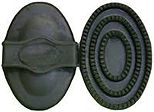
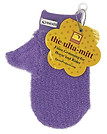
I have found in some of my behavioral therapy cases that certain horses are extremely fascia sensitive. In those cases, a simple touch of any grooming tool will create an outburst of anxiety and undesirable behaviors. For those horses in particular, I recommend that no matter how dirty the horse first is when it's time to groom that certain massage techniques with the hands are used first, before a single grooming item is picked up. Certain slow and gentle techniques with your hands can help relax, warm and loosen up the fascia. Some horses feel discomfort or even pain with their fascia is cold and tight. With a better release of the fascia, the horse is much more inclined and open to having grooming tools used. However, these types of fascia sensitive horses should receive the softest and most minimal of grooming tools. Things such as super soft microfiber cloths and super soft finishing brushes or lambswool help to keep fascia sensitive horses happy and less stressed. Equi-Clean Grooming Wipes are extremely soothing to all horses and especially recommended for fascia sensitive horses.
One of my favorite brushes is the "Haas Diva Exclusive Soft Brush". It has a lambswool center. I keep 2 of these on me at all times. The lambswool does tend to compress down quickly with use, so I use scissors to cut down the outer rim of bristles so that they are lower than the lambswool center. They are more expensive but worth it in my opinion.
SIDE NOTE >> Keep in mind, there may be underlying causes why your horse might be grumpy during grooming other than the grooming tools used. This could be from gastric discomfort, muscle tightness, general pain or discomfort in the body, and sometimes it's the actual approach or method when using grooming tools that is bothering the horse. It could be that the horse associates being tacked up after being groomed and associates pain or discomfort as a memory response.
Some of my favorite things > > >
I am always looking for the next best thing to improve the lives of horses. Some things still remain on my favorites list!
Here are just a few ( I try to keep this list updated):